Blog
I let an AI team run my 4 businesses for a month. Here's the honest scorecard (revenue: $0 so far)
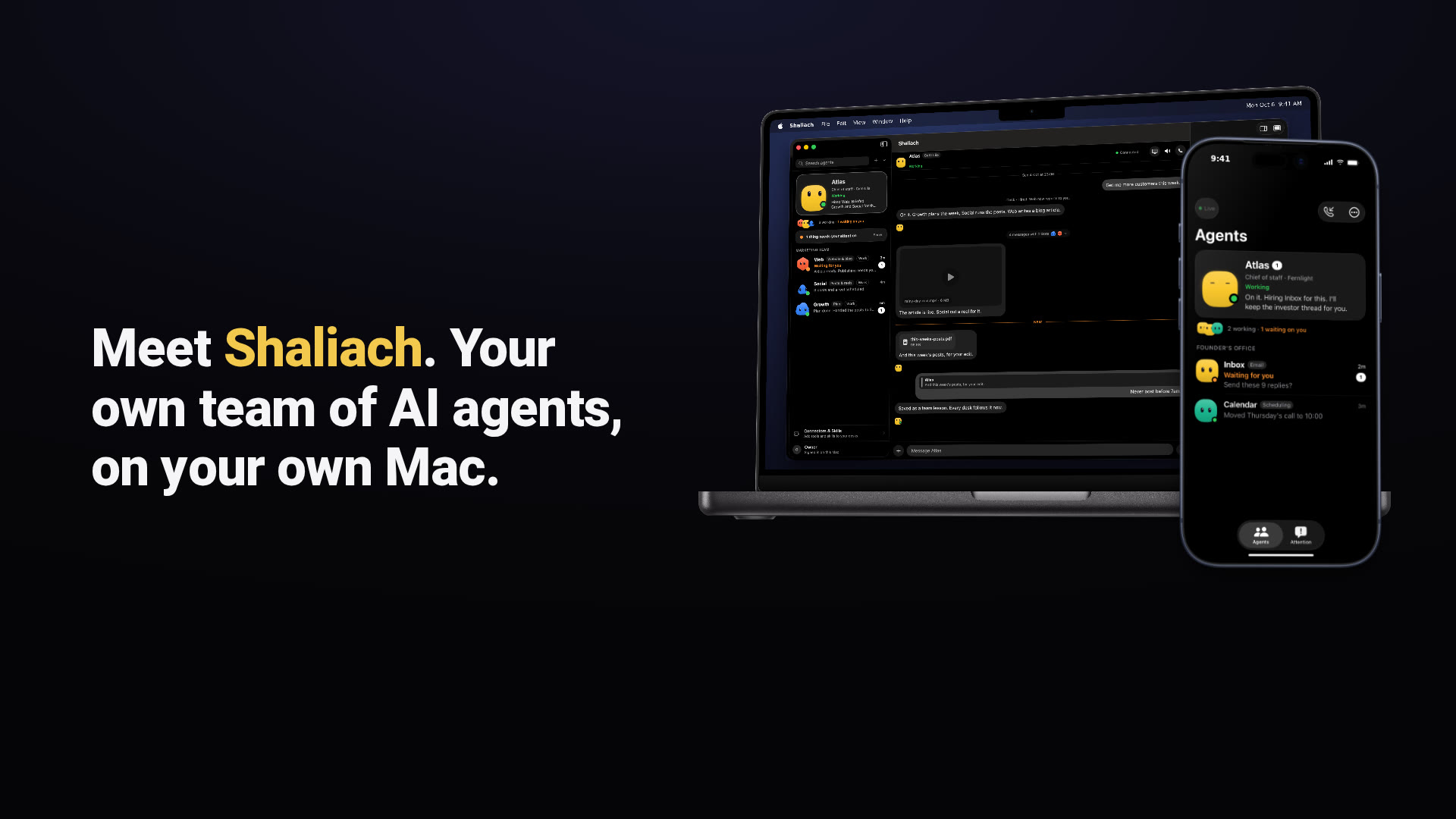
Revenue across all my businesses is $0. I checked our own money board on 5 October, and that is the number.
I am publishing it anyway. Most "AI ran my company" stories skip the money line. I would rather you trust the rest of this post.
So here is the full scorecard of a month with an AI team, from 6 September to 4 October 2026.
How an AI team runs a business, in plain words
I send one message to Atlas. Atlas is the AI chief of staff.
Atlas hires agents. Each agent has its own computer. They write code, post videos, send outreach and watch production.
One rule makes it safe. Anything that spends money or goes public waits for one tap on my phone. When I correct an agent, the correction is saved as a lesson. Every agent then follows it.
The four businesses:
- Chairside Reels, a video app.
- A holiday-villa video offer, with outreach to agencies in the UK and UAE.
- Five YouTube music channels.
- Yossi-Yair Edits, a set of clip channels.
The software behind it is called Shaliach. It launches publicly on 6 October, with a Show HN post and one on X. It is source-available under the PolyForm Noncommercial license. It is free for non-commercial use. It is not affiliated with Anthropic. I do not call it open source, because it is not.
What worked: the receipts
I picked the six strongest. They are all on the public proof page.
- Production went down on 1 October. Chairside Reels returned an error because the cloud provider declined a card. The team found the cause within minutes and put it in front of me. The site came back once billing reopened. A standing watch now checks it.
- A critical security bug. Code review found an access bug in Chairside. QA confirmed it on the live site. It was fixed before any real customer signed up.
- A dead sign-up button. "Continue with Google" silently did nothing, because a security header blocked the form. It was hotfixed the same day. Every release now tests that button.
- A leaky sign-up funnel. The numbers showed people leaving at Google sign-in. So the team built email sign-in. They also fixed prices: US visitors saw pounds, and now prices show in the visitor's own currency.
- Work that lived on one machine. A nightly sweep found two working copies holding 11 commits that existed nowhere else. Everything was saved to GitHub. The sweep now runs every night.
- Mistakes caught before they went public. On the music channels, titles said "stress relief", a health claim YouTube's rules can punish. They were re-titled, and the publishing code now blocks it. Duplicate titles and a blurry Shorts crop were also caught before posting.
Meanwhile, the routine work ran without me. Five music channels posted daily. Four clip channels posted 8 clips a day between them. Outreach to holiday-villa agencies in the UK and UAE was written, sent and followed up, with me approving the sends. A morning brief hit my phone at 8:00 every day.
What didn't work
Revenue is $0. Posting, fixing and outreach are not the same as sales.
Social replies mostly went nowhere. I read the numbers about a day after posting. My replies on X got 5, 8, 11 and 11 views. Nobody answered. One more was not even showing in the feed yet.
Reddit was mixed. My two top-level posts were both removed by Reddit's spam filter, because the account is new. We stopped posting there. The comments survived, and most got 1 to 3 points.
Some comments did earn real replies. They were detailed how-to answers on "how do you do X" questions, in mid-size communities. The best one gave readers something to copy: files and a sample prompt.
One more miss. A public post showed details about my setup that should never be public. It came down, and every agent now follows a rule against it.
What surprised me
The boring catches mattered most. Nobody asked the team to notice a dead button or unpushed code. They noticed anyway.
I also expected the hard part to be the AI. It was the approvals. Deciding what deserves my tap, and what the team can just do, is the real job.
And attention did not follow the work. Daily posting ran fine. Views did not come by themselves.
Lessons for a founder trying this
- Keep the yes. Let agents do the work. Keep payments, publishing and outward email behind one tap.
- Turn every correction into a lesson. The leaked post cost me once. The rule means it should not cost me twice.
- Test the thing that broke. The sign-up button and the title rule now have checks, so they stay fixed.
- Have something watch production. The outage was found in minutes because something was looking.
- Do not mistake activity for traction. A busy team and $0 can both be true.
What's next: turning attention into sales
This month the job changes. The team has built and fixed a lot. Now it has to bring in a paying customer.
I will keep the Reddit lesson. Answer real questions with something copyable, then follow up warmly. On X, I will aim for fresh threads where a reply can be seen, and end on a specific question.
I will also keep the outreach going, and keep this scorecard honest. If revenue moves, I will say so. If it does not, I will say that too.
Want this for your company? See shaliach.me/proof.